Art for the office, Blog
Can office artwork influence employee productivity?
Feb
Being distracted at work is not necessarily a bad thing. If you are being distracted by a work of art, it can lower your stress, boost your productivity and increase your wellbeing.
In a recent article in the Guardian, Dr Craig Knight, a researcher of the psychology of working environments for 12 years at the University of Exeter, is quoted saying:
“There is a real tendency to opt for sanitised, lean workspaces, designed to encourage staff just to avoid distraction,”. But there isn’t a branch of science in the world which believes this approach boosts productivity or makes for happier workers, according to Knight. “If you enrich a space people feel much happier and work better; a perfect way of doing this is by using art.”
Workplaces around the world are embracing this philosophy, including Deutsche Bank.

Indeed, the German investment bank is the proud owner of the most extensive collection of corporate art in the world, counting some 60,000 artworks across 900 offices in 40 countries. They even have an interactive app which will give more information about the work of art the employee is looking at. The bank also has an “Arthothek” where employees can pass by and ask for advice when it comes to choosing artwork for the office.
Knight and his team conduct studies into the most effective work environment by asking participants to spend an hour working in four different types of office space:
Lean: with only the things necessary to do the tasks.
Enriched: containing an arrangement art and plants
Empowered: the same artwork and plants but participants can arrange them as they please.
Disempowered: participants arranged the plants and art themselves – but the experimenter then changed these personal touches and went back to the original layout.
Knight and his team realised that working in an enriched office made the workers about 15% quicker than in the lean office and had fewer health complaints. This result doubled for those who worked in an empowered office. As for the disempowered ones, their productivity level was the same as those in the lean office space.
The Guardian article goes on to discuss art at work with Alex Heath, managing director at International Art Consultants, which advises workplaces on art: “Art is a way of retaining staff and encouraging them to be in the office, at a time when people increasingly want to work remotely,” he says.
“Some companies consciously use art as part of their retention strategy,” he says. “Aesthetic in the truest sense means energy-giving which is what a workplace needs, rather than a bland, industrial environment which can be more like giving workers a dose of anaesthetic.”
The company has helped numerous companies to reap the benefits of having art in the workplace. For example, they have commissioned bold and bright contemporary pieces for waiting rooms or recreational spaces, because they make for good talking points. Kinetic artworks and light installations are also favourite according to Heath, as they inject dynamism into very strait-laced environments.
The Guardian article also interviews the artist Dominic Harris who specialises in interactive art using video and lights and is featured in a number of workplaces:
“People spend most of their lives at work and being in an office can become very routine, but if there is interactive art around the place it offers an ongoing sense of intrigue and engagement,” he says.
Harris has a studio Cinimod that often creates works which react to people passing by: for example a cascading virtual waterfall you can dip your hand into, or a wall of butterflies that beat their wings.
“A momentary distraction is not a bad thing in the workplace. Art has historically always been about escape, and we all need is an escape sometimes.”
In closing, your environment matters, a lot. It determines how you feel, sets the tone for your work, it can inspire, energize or conversely suck the motivation out of you.
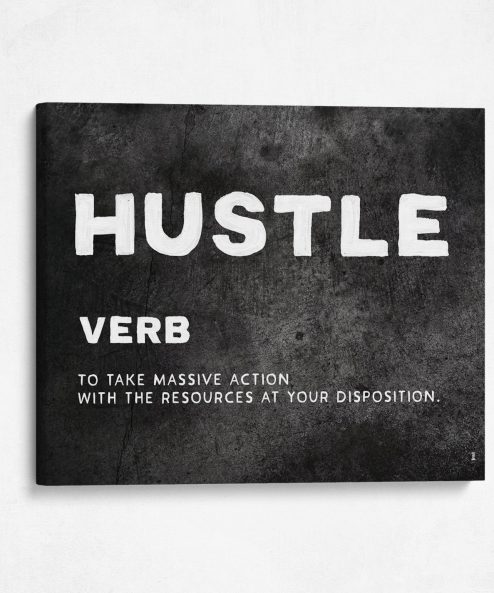
Combine art with inspirational wisdom and you have a winning combination to help your team thrive in an unpredictable world.