
Blog
Who are the Stoic Founders: Cato + his best quotes
Mar
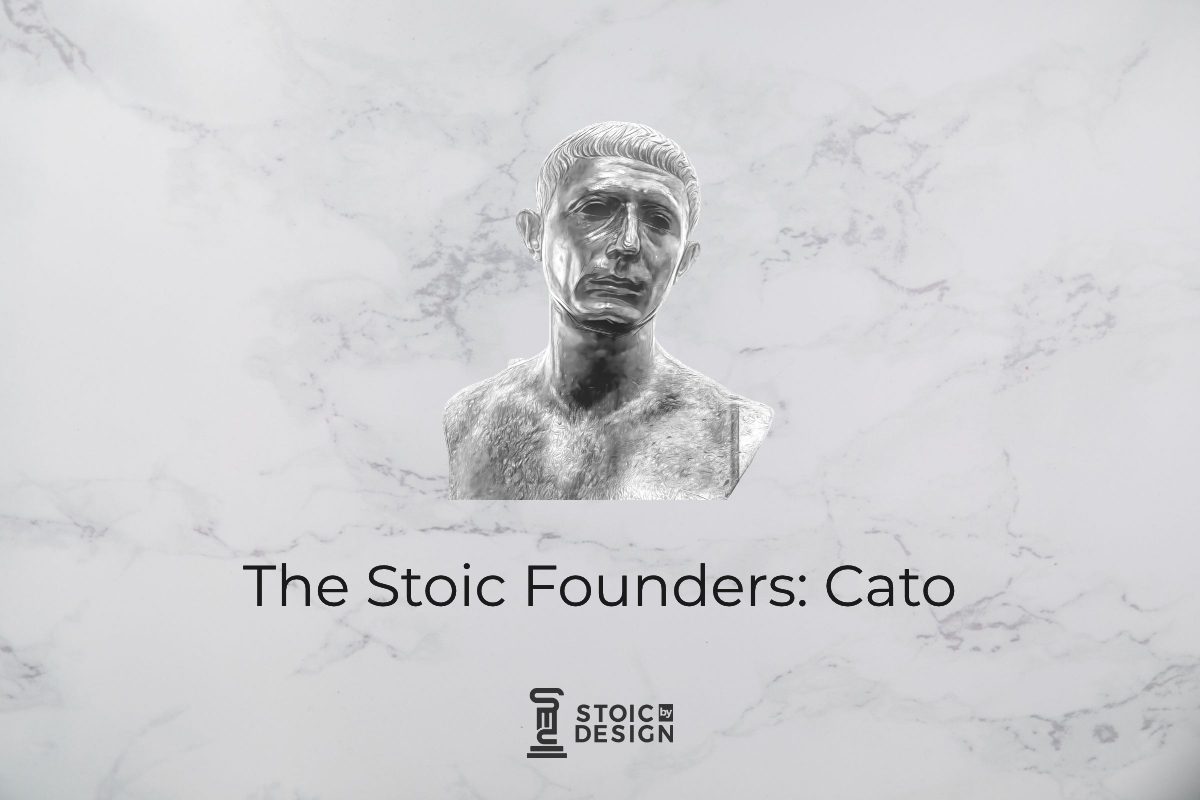
Cato was a Roman Senator and the mortal enemy of Julius Caesar. Often referred to as Liberty by the revolutionaries, Cato was the last man standing when Rome’s Republic fell. For centuries, philosophers and theologians considered Cato the Good Suicide, as it was an exception to the rule against self-slaughter. As for Julius Caesar, he never forgave him, even though this dictator pardoned every opponent.
Cato was an aristocrat and a soldier, a Stoic and a senator. He spent his life in the public eye as the leading figure of Rome’s optimates, who saw themselves as the defenders of Rome’s constitution. They believed they must preserve the centuries-old system of government that made Rome into the mighty empire it was at the time.
Cato built his career out of purity. He refused to give an inch in the face of pressure to compromise. He achieved and wielded power by disdaining power. He was a politician above politics.
Cato’s name has faded in recent times, even though his mortal enemy’s flourished in comparison. Perhaps because history is often written by victors, maybe because Cato’s principles went out of style, he was a brave, successful, generous commander, but he didn’t write down his epics as others might have done. He studied and practised philosophy, working to become the ideal Stoic, but he preferred to live this philosophy instead of writing it down. Cato’s legacy consists of a single, short letter.
The only form of promotion that Cato valued was the ethical conduct of one’s life. While Rome overflowed with wealth, he preferred to wear old and simple clothing of Rome’s mythical founders. He preferred a life of frugality, almost as a monk. He used to eat a poor man’s bread and live without luxuries. He was training himself to endure small difficulties with patience and forbearance.
Cato refused political compromise in every form. He considered that all virtues were the same virtue, and the same goes for vices. He built an impossible, almost inhuman standard that created unshakable authority. He was the arbiter of right and wrong.
Cato didn’t write an autobiography; he didn’t leave behind a set of journals or letters. The most detailed account of his life comes from Plutarch. He was a Greek biographer, magistrate and priest of Apollo. He is best known for his Parallel Lives, a collection of stories on eminent Greeks and Romans, including the life of Cato.
Cato quotes
I know not what treason is, if sapping and betraying the liberties of a people be not treason.
Cato the YoungerSome have said that it is not the business of private men to meddle with government–a bold and dishonest saying, which is fit to come from no mouth but that of a tyrant or a slave. To say that private men have nothing to do with government is to say that private men have nothing to do with their own happiness or misery; that people ought not to concern themselves whether they be naked or clothed, fed or starved, deceived or instructed, protected or destroyed.
Cato the YoungerA honest man is seldom a vagrant.
Cato the YoungerBy Liberty I understand the Power which every Man has over his own Actions, and his Right to enjoy the Fruits of his Labour, Art, and Industry, as far as by it he hurts not the Society, or any Members of it, by taking from any Member, or by hindering him from enjoying what he himself enjoys. The Fruits of a Man’s honest Industry are the just Rewards of it, ascertained to him by natural and eternal Equity, as is his Title to use them in the Manner which he thinks fit: And thus, with the above Limitations, every Man is sole Lord and Arbitrer of his own private Actions and Property.
Cato the YoungerConsider it the greatest of all virtues to restrain the tongue.
Cato the YoungerBitter are the roots of study, but how sweet their fruit.
Cato the YoungerConsider in silence whatever any one says: speech both conceals and reveals the inner soul of man.
Cato the YoungerThe cabbage surpasses all other vegetables. If, at a banquet, you wish to dine a lot and enjoy your dinner, then eat as much cabbage as you wish, seasoned with vinegar, before dinner, and likewise after dinner eat some half-dozen leaves. It will make you feel as if you had not eaten, and you can drink as much as you like.
Cato the YoungerI will begin to speak, when I have that to say which had not better be unsaid.
Cato the YoungerIn doing nothing men learn to do evil.
Cato the YoungerBlessed be they as virtuous, who when they feel their virile members swollen with lust, visit a brothel rather than grind at some husband’s private mill.
Cato the YoungerFor some people there is no comfort without pain. Thus; we define salvation through suffering. Hence, why we choose people who we know aren’t right for ourselves.
Cato the YoungerSpeak briefly and to the point.
Cato the YoungerFlee sloth; for the indolence of the soul is the decay of the body.
Cato the YoungerIt is remarkable that men, when they differ in what they think considerable, will be apt to differ in almost everything else; their difference begets contradiction; contradiction begets heat; heat quickly rises into resentment, rage, and ill-will; thus they differ in affections, as they differ in judgment.
Cato the YoungerWise men are more dependent on fools than fools on wise men.
Cato the YoungerThe primary virtue is: hold your tongue; who knows how to keep quiet is close to God.
Cato the YoungerRegard not dreams, since they are but the images of our hopes and fears.
Cato the YoungerAll have the gift of speech, but few are possessed of wisdom.
Cato the YoungerI would not be beholden to a tyrant, for his acts of tyranny. For it is but usurpation in him to save, as their rightful lord, the lives of men over whom he has no title to reign.
Cato the YoungerThis is my firm persuasion, that since the human soul exerts itself with so great activity, since it has such a remembrance of the best, such a concern for the future, since it is enriched with so many arts, sciences, and discoveries, it is impossible but the being which contains all these must be immortal.
Cato the Younger
